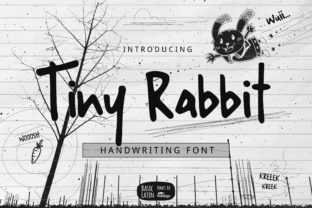
Tiny Rabbit Font: Playful Typography for Web Design
Tiny Rabbit is a handwritten font that brings a warm, personal touch to digital design. Its soft curves and casual strokes make it ideal for web projects that need a friendly yet professional look. As a script font, it stands out in headers, buttons, and decorative elements without overwhelming the layout.
Web designers often seek fonts that balance personality with readability. Tiny Rabbit achieves this by maintaining legibility even at smaller sizes. Its natural flow makes it suitable for both large display text and subtle accents across a website’s visual hierarchy.
Using Tiny Rabbit in Web Layouts
In hero sections, Tiny Rabbit can draw attention without being distracting. It works well for headlines that aim to convey approachability, such as in a creative portfolio or a boutique online store. The font’s irregularity adds character while still supporting clear communication.
For call-to-action buttons, Tiny Rabbit can add a unique flair. Pairing it with a clean sans serif for the button text creates contrast and guides the user’s eye effectively. This combination helps maintain a modern aesthetic while keeping the interface intuitive.
On landing pages, Tiny Rabbit can be used for short phrases like “Join Our Community” or “Start Your Journey.” These placements reinforce brand tone without interfering with the primary content. It’s especially effective when used sparingly to avoid visual clutter.
Brand Identity and Visual Hierarchy
When designing a brand’s online presence, consistency is key. Tiny Rabbit can serve as a signature font for logos, social media graphics, and email headers. Its handcrafted feel aligns with brands that want to appear authentic and relatable.
Visual hierarchy is crucial for guiding users through a website. Tiny Rabbit can act as a secondary typeface for section headings or subheadings, complementing a primary sans serif or serif font. This pairing ensures that the design remains organized and easy to navigate.
For blog headers or course pages, Tiny Rabbit adds a human element that encourages engagement. It can be used alongside a more structured font for body text, creating a balanced reading experience that feels both professional and inviting.
Readability on Digital Screens
On mobile devices, Tiny Rabbit maintains clarity at various sizes. Its open spacing prevents crowding, making it suitable for small buttons or navigation menus. When used on dark backgrounds, the font’s contrast enhances legibility without requiring additional styling.
For image overlays or banners, Tiny Rabbit provides a soft, readable texture. It pairs well with bold colors or gradients, adding warmth without competing with the background. This makes it a versatile choice for promotional content and digital ads.
When designing for responsive layouts, Tiny Rabbit adapts smoothly across screen sizes. Its organic shape allows it to scale without losing its charm, ensuring that the design remains cohesive from desktop to mobile views.
Font Pairing and Design Assets
Pairing Tiny Rabbit with a simple sans serif like Roboto or Open Sans creates a clean, modern look. This combination is perfect for websites that prioritize clarity and professionalism. For editorial designs, pairing it with a serif font like Georgia or Lora can evoke a more traditional, thoughtful vibe.
Designers should consider the font’s weight and style options. If Tiny Rabbit includes multiple weights or alternates, they can be used to create subtle emphasis or variation within a layout. This flexibility supports more dynamic and engaging web experiences.
When selecting a font for web use, check if it offers webfont formats like WOFF or WOFF2. These ensure smooth performance across different browsers and devices. Also, verify multilingual support if the website targets international audiences.
Commercial Use and Licensing
Tiny Rabbit is a premium font, so understanding its commercial licensing is essential. Ensure that the license covers use on websites, client projects, and digital templates. This is particularly important for SaaS founders, online store owners, and creative entrepreneurs who rely on scalable design assets.
For branding purposes, using Tiny Rabbit in logos or app interfaces requires proper licensing. Always review the terms to avoid legal issues, especially when distributing design files or embedding the font in web applications.
As a script font, Tiny Rabbit offers a distinct identity that can elevate a brand’s digital presence. Whether used for a coaching website, product landing page, or digital course, it brings a sense of authenticity that resonates with users.
Its playful yet refined nature makes it a valuable addition to any designer’s toolkit. From headers to buttons, Tiny Rabbit contributes to a more expressive and engaging web experience that aligns with modern design principles.