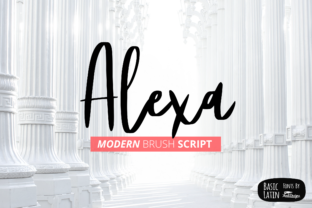
Alexa: A Handwritten Font for Creative Projects
There I was, staring at a blank brand board, trying to figure out how to give a new boutique coffee shop its voice. The client wanted something warm, approachable, and just a little bit quirky. After testing a few options, I landed on Alexa—a modern handwritten brush font that felt like it had been crafted for exactly this kind of project.
What Makes Alexa Stand Out
Alexa has a soft, elegant personality that feels both modern and timeless. Its clean lines and subtle swashes make it versatile enough for a range of design applications. It doesn’t scream for attention but still manages to command it when needed. The font has a natural flow, as if it were written with a brush rather than a keyboard, giving it an organic feel that’s hard to replicate with other typefaces.
It’s not overly ornate, which is a relief when you’re working on something that needs to remain legible and professional. The spacing between letters is generous, making it ideal for headlines, logos, and short phrases where clarity is key. But don’t let that fool you—Alexa can also add a touch of flair to more intricate designs without feeling cluttered or messy.
Testing Alexa in Real-World Branding
I first used Alexa on a logo concept for the coffee shop. The font paired well with a simple icon, creating a balanced composition that felt both stylish and easy to read. When I placed it on a packaging mockup, it added a sense of craftsmanship that matched the brand’s handmade ethos. The font didn’t overpower the design; instead, it complemented the overall aesthetic.
On a business card, Alexa looked great in a bold weight, giving the card a polished yet personal feel. For a website header, it worked well as a display font, adding visual interest without disrupting the user experience. In social media graphics, it brought a friendly tone that resonated with the target audience.
One thing I noticed was how Alexa performed in different sizes. At larger sizes, it maintained its character and readability. But when scaled down for body text or small labels, it became less legible. That’s something to keep in mind if you're considering using it for anything beyond headlines or short phrases.
When Alexa Shines
Alexa excels in projects that benefit from a human touch. It works especially well for brands that want to convey warmth, creativity, or authenticity. Think of it as the go-to font for a handmade shop, a local café, or a skincare line that wants to feel personal and trustworthy.
It’s also a strong choice for editorial design, where a bit of personality can elevate the overall look. Whether you're designing a poster, flyer, or magazine spread, Alexa can add a unique flair that stands out from the crowd.
For web design, Alexa can be used effectively in hero sections, headings, or callout boxes. As a webfont, it should be used sparingly to avoid slowing down page load times. Pairing it with a clean sans serif for body text can help maintain balance and readability across the site.
Pairing Tips and Limitations
When pairing Alexa with other fonts, it's best to go with something that complements its handcrafted feel. A classic serif font like Georgia or Playfair Display can create a nice contrast, while a modern sans serif like Helvetica or Montserrat can provide a clean, contemporary counterpoint.
Alexa isn’t meant to be a workhorse font. It’s not suitable for long paragraphs of text or formal corporate documents. If you're looking for a font that can handle body copy, you’ll need something else. But for short, impactful phrases, it’s hard to beat.
That said, Alexa is perfect for accent use. It can highlight key messages, add visual interest to a layout, or serve as a signature element in a design system. Just remember to use it intentionally and with restraint.
Final Thoughts on Alexa
After testing Alexa in a variety of branding scenarios, I can confidently say it’s a valuable addition to any designer’s toolkit. Its elegance, versatility, and personality make it a great choice for projects that need a touch of warmth and individuality.
Whether you're working on a logo, a packaging design, or a social media campaign, Alexa can help you create something that feels authentic and engaging. Just be mindful of its limitations and always test it in real-world conditions before finalizing your design.
If you're looking for a premium font that can bring a fresh, creative energy to your work, Alexa is definitely worth considering. It’s a font that understands the balance between style and functionality—and that’s something every designer appreciates.